The Black History Month Calendar 2026 Daily is a valuable resource for educators, families, students, organizations, and communities looking to honor and celebrate the achievements, contributions, and resilience of Black Americans throughout February. Black History Month provides an opportunity to learn about influential leaders, cultural milestones, historic events, and the ongoing impact of Black excellence in society.
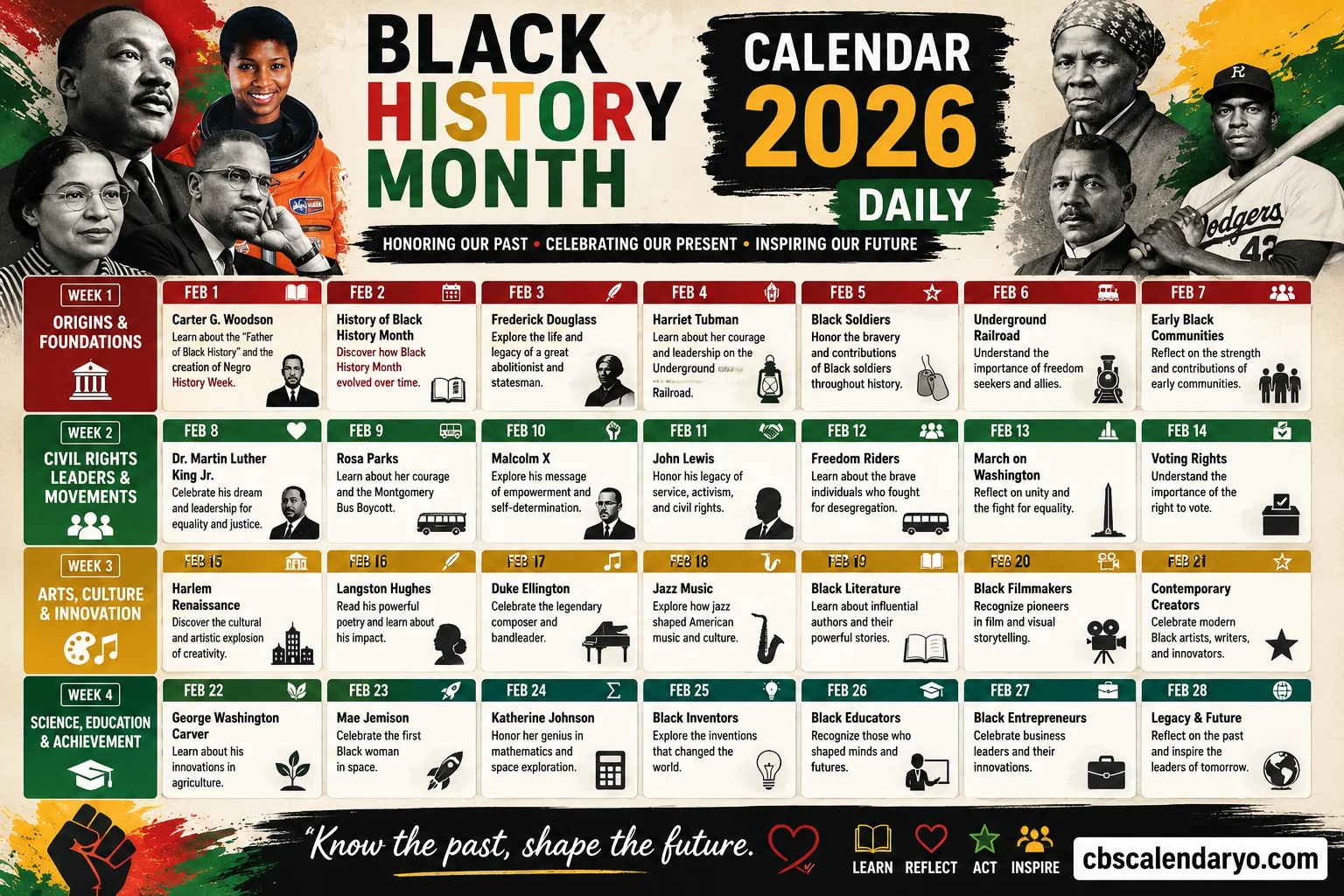
Rather than limiting recognition to a single event or lesson, a daily calendar encourages continuous learning and engagement. Each day can highlight a significant figure, historical event, cultural contribution, or educational activity that deepens understanding and appreciation of Black history.
In this guide, we’ll explore how to use a Black History Month daily calendar, suggest meaningful activities, and provide ideas for making February 2026 an inspiring month of learning and reflection.
What Is Black History Month?
Black History Month is an annual observance dedicated to recognizing the achievements and contributions of Black individuals throughout history. It originated from Negro History Week, established in 1926 by historian Carter G. Woodson, often referred to as the “Father of Black History.”
The observance expanded into Black History Month in the United States during the 1970s and has since become an important educational and cultural event celebrated nationwide.
Why Use a Black History Month Calendar 2026 Daily?
A daily calendar helps people engage with Black history consistently rather than only occasionally.
Benefits Include:
- Encourages daily learning
- Promotes cultural awareness
- Inspires meaningful discussions
- Supports educational goals
- Highlights diverse voices and perspectives
- Connects historical events to modern issues
By dedicating just a few minutes each day, participants can gain a richer understanding of Black history and culture.
Black History Month Calendar 2026 Daily Themes
Week 1: Origins and Foundations
The first week can focus on the origins of Black History Month and early pioneers.
February 1
Learn about Carter G. Woodson and the creation of Negro History Week.
February 2
Explore the history of Black History Month and its evolution.
February 3
Study the life and legacy of Frederick Douglass.
February 4
Discover the achievements of Harriet Tubman.
February 5
Examine the role of Black soldiers in American history.
February 6
Learn about the Underground Railroad.
February 7
Reflect on early Black communities and their contributions.
Week 2: Civil Rights Leaders and Movements
The second week highlights influential leaders who fought for equality and justice.
February 8
Explore the legacy of Dr. Martin Luther King Jr.
February 9
Learn about Rosa Parks and the Montgomery Bus Boycott.
February 10
Study the impact of Malcolm X.
February 11
Recognize the contributions of John Lewis.
February 12
Examine the Freedom Riders movement.
February 13
Learn about the March on Washington.
February 14
Reflect on the importance of voting rights.
Week 3: Arts, Culture, and Innovation
This week celebrates Black creativity and innovation.
February 15
Discover the Harlem Renaissance.
February 16
Learn about Langston Hughes and his poetry.
February 17
Explore the music of Duke Ellington.
February 18
Recognize the influence of jazz on American culture.
February 19
Study Black contributions to literature.
February 20
Learn about Black filmmakers and storytellers.
February 21
Celebrate contemporary Black artists and creators.
Week 4: Science, Education, and Achievement
The fourth week focuses on groundbreaking accomplishments.
February 22
Learn about George Washington Carver.
February 23
Study the achievements of Mae Jemison, the first Black woman in space.
February 24
Recognize the contributions of Katherine Johnson.
February 25
Explore Black inventors and innovators.
February 26
Learn about Black educators and scholars.
February 27
Celebrate Black entrepreneurs and business leaders.
February 28
Reflect on Black history’s ongoing impact and future generations.
Daily Activities for Schools
Teachers can use the Black History Month Calendar 2026 Daily to engage students through:
Classroom Activities
- Historical figure presentations
- Daily trivia questions
- Research projects
- Group discussions
- Creative writing assignments
- Poster-making contests
These activities help students connect with history in meaningful ways.
Daily Activities for Families
Families can participate in Black History Month at home through simple daily activities.
Family Ideas
- Read biographies together
- Watch educational documentaries
- Visit museums virtually
- Discuss historical events during meals
- Explore Black authors and artists
- Create family learning journals
These experiences encourage lifelong learning and cultural appreciation.
Workplace Black History Month Calendar Ideas
Organizations can use daily themes to promote diversity and inclusion.
Workplace Activities
- Employee spotlight features
- Lunch-and-learn sessions
- Book recommendations
- Guest speaker events
- Historical fact emails
- Community outreach initiatives
Such activities foster awareness and create inclusive workplace environments.
Digital Resources for Daily Learning
Technology makes it easier than ever to engage with Black History Month content.
Useful Resources
| Resource Type | Examples |
|---|---|
| Museums | Smithsonian Exhibits |
| Educational Sites | National Archives |
| Videos | Documentary Platforms |
| Podcasts | Black History Podcasts |
| Books | Historical Biographies |
For additional educational materials, visit the official National Museum of African American History and Culture website: https://nmaahc.si.edu
The Importance of Daily Reflection
Learning about Black history is not only about understanding the past but also about recognizing ongoing contributions and challenges.
Daily reflection helps participants:
- Develop empathy
- Build cultural competence
- Encourage critical thinking
- Celebrate achievements
- Promote inclusivity
Small daily actions can lead to meaningful growth and understanding.
Common Mistakes to Avoid
When planning Black History Month activities, avoid:
- Limiting discussions to only a few well-known figures.
- Focusing solely on historical struggles.
- Overlooking contemporary achievements.
- Treating Black History Month as a one-time event.
- Ignoring diverse perspectives within Black communities.
A balanced approach celebrates both historical and modern contributions.
Frequently Asked Questions
It provides daily educational opportunities to learn about Black history, culture, achievements, and influential figures throughout February.
Historian Carter G. Woodson established Negro History Week in 1926, which later evolved into Black History Month.
Yes. Families can use daily activities, readings, discussions, and educational resources to participate together.
February was chosen to honor the birthdays of Abraham Lincoln and Frederick Douglass, both significant figures in Black history.
Schools can incorporate daily lessons, projects, discussions, and creative activities tied to historical themes and influential individuals.
No. It also highlights current achievements, ongoing contributions, and future opportunities for Black communities.
The Black History Month Calendar 2026 Daily offers a powerful way to celebrate, learn, and reflect throughout February. By dedicating each day to a historical figure, event, cultural contribution, or educational activity, individuals and communities can gain a deeper appreciation for the impact of Black Americans on history and society.
Whether used in schools, homes, workplaces, or community organizations, a daily calendar transforms Black History Month into an engaging journey of discovery. Through consistent learning and meaningful reflection, February 2026 can become a month of inspiration, understanding, and celebration of Black excellence.
