The Tax Season Calendar 2026 Important Deadlines guide is an essential resource for individuals, self-employed professionals, small business owners, and organizations preparing for tax season. Missing an important tax deadline can result in penalties, interest charges, delayed refunds, and unnecessary stress.
By understanding the key dates in the 2026 tax calendar, taxpayers can stay compliant, plan ahead, and file their returns accurately and on time. Whether you’re filing a personal income tax return, making estimated tax payments, or requesting an extension, having a reliable calendar helps ensure nothing falls through the cracks.
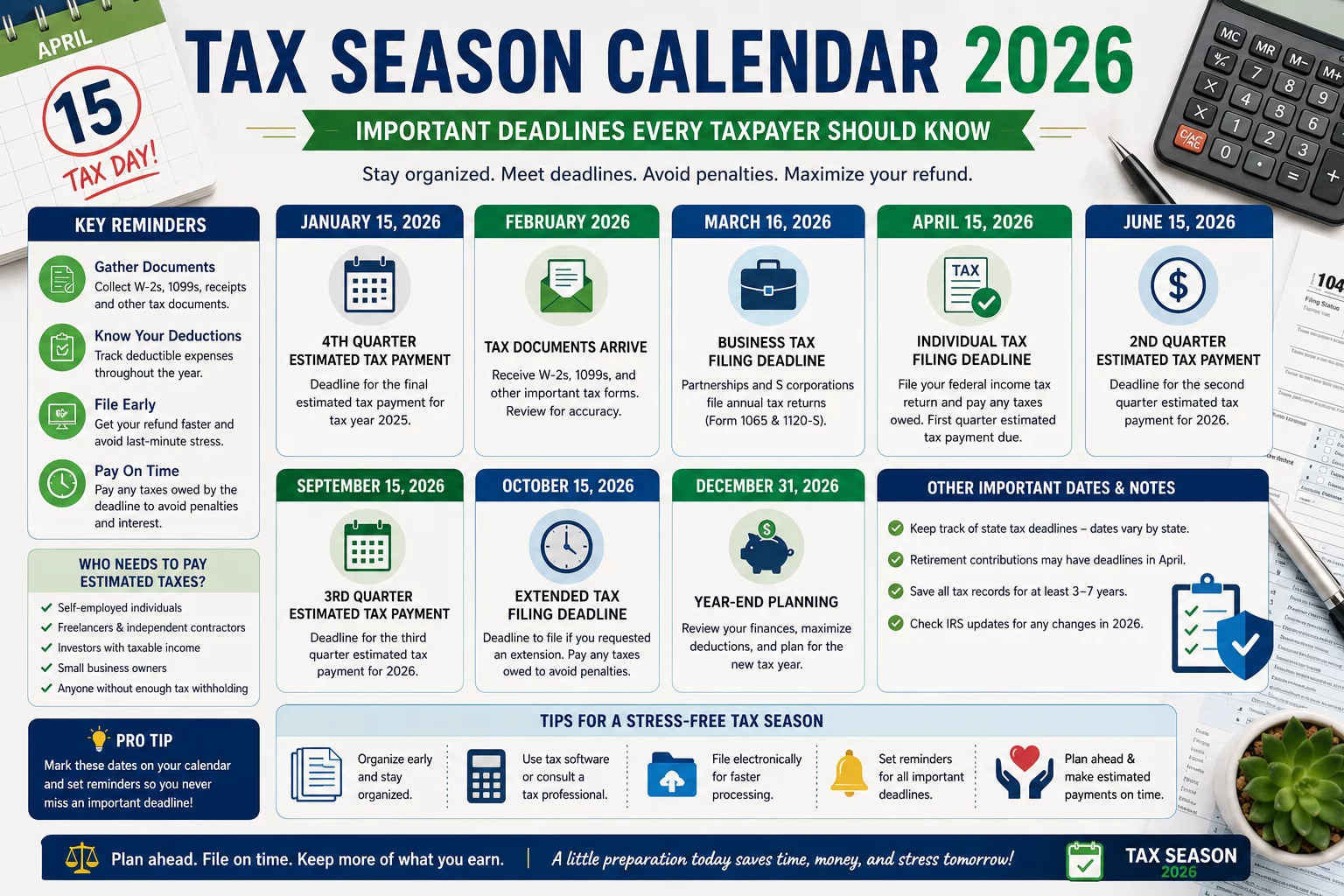
This guide covers the most important tax deadlines, filing requirements, preparation strategies, and frequently asked questions to help you navigate tax season successfully.
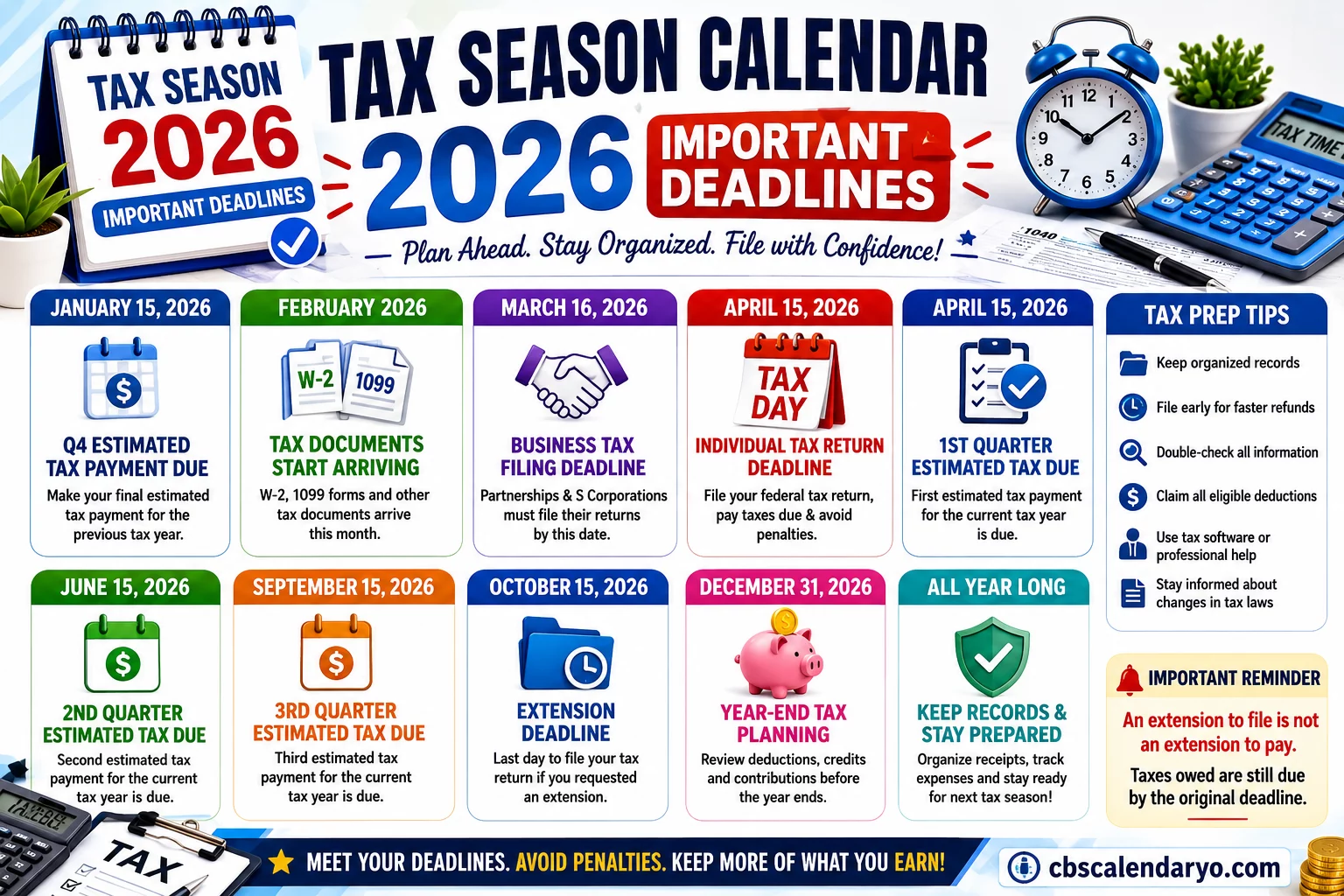
Why a Tax Season Calendar Matters
Tax season involves numerous deadlines that vary depending on your filing status, income sources, and business activities.
Benefits of Using a Tax Calendar
- Avoid late-filing penalties
- Prevent interest charges
- Receive refunds sooner
- Improve financial planning
- Stay organized throughout the year
- Reduce tax-season stress
Keeping track of deadlines helps taxpayers meet their obligations while maximizing available deductions and credits.
Key Tax Season Calendar 2026 Important Deadlines
Although tax deadlines can occasionally change due to federal holidays or special circumstances, the following dates are generally among the most important.
January 2026
January marks the beginning of tax season preparation.
Important Tasks
- Gather tax documents
- Review income records
- Organize receipts and deductions
- Update personal information
Taxpayers should also begin preparing for upcoming filing requirements.
January 15, 2026
Fourth Quarter Estimated Tax Payment Due
Self-employed individuals, freelancers, and investors who make quarterly estimated tax payments typically need to submit their final estimated payment for the previous tax year by mid-January.
February 2026
February is an important month for collecting tax forms.
Documents to Expect
- W-2 forms
- 1099 forms
- Mortgage interest statements
- Investment income statements
- Student loan interest forms
Review all documents carefully for accuracy.
March 2026 Important Tax Deadlines
March 16, 2026
Business Tax Filing Deadline
Many partnerships and S corporations must file annual tax returns by mid-March.
Business owners should:
- Finalize accounting records
- Reconcile expenses
- Review payroll information
- Prepare required schedules
Early preparation helps avoid last-minute issues.
April 2026 Tax Season Milestones
April remains the most important month of tax season.
April 15, 2026
Individual Tax Return Filing Deadline
This is generally the deadline for filing federal income tax returns for most taxpayers.
By this date, taxpayers should:
- File tax returns
- Pay any taxes owed
- Submit extension requests if needed
- Contribute to certain retirement accounts for the prior tax year
Missing this deadline may result in penalties and interest charges.
First Quarter Estimated Tax Payment
Many self-employed taxpayers must also submit their first estimated tax payment for the current tax year during April.
Tax Extensions and Additional Time
Not everyone can complete their tax return by the April deadline.
Filing an Extension
An extension generally provides additional time to file paperwork.
However, taxpayers should remember:
- An extension to file is not an extension to pay.
- Taxes owed are still generally due by the original filing deadline.
- Estimated payments should be made to avoid penalties.
Proper planning can help minimize additional costs.
June 2026 Estimated Tax Deadline
June 15, 2026
The second estimated tax payment for many self-employed individuals and small business owners is typically due in June.
Who Should Pay Estimated Taxes?
- Freelancers
- Independent contractors
- Gig workers
- Investors
- Small business owners
Regular estimated payments help avoid large tax bills later.
September 2026 Tax Deadline
September 15, 2026
The third quarterly estimated tax payment is generally due in September.
Taxpayers should use this opportunity to:
- Review income projections
- Adjust withholding if necessary
- Recalculate estimated obligations
Proper adjustments help prevent underpayment penalties.
October 2026 Filing Extension Deadline
October 15, 2026
Taxpayers who requested a filing extension generally must submit their completed returns by this date.
This is often the final deadline for:
- Individual tax returns
- Supporting documentation
- Final tax calculations
Waiting until October can increase the risk of errors due to time constraints.
Important Tax Documents Checklist
Having all necessary documents simplifies filing.
Common Tax Forms
| Document | Purpose |
|---|---|
| W-2 | Employee wages |
| 1099-NEC | Independent contractor income |
| 1099-INT | Interest income |
| 1099-DIV | Dividend income |
| 1098 | Mortgage interest |
| SSA-1099 | Social Security benefits |
Keep these documents organized throughout the year.
Tax Preparation Tips for 2026
Start Early
Early preparation allows time to gather missing information and resolve discrepancies.
Use Digital Records
Electronic records improve organization and reduce paperwork.
Review Prior Returns
Past returns can help identify deductions, credits, and recurring filing requirements.
Track Deductible Expenses
Maintaining detailed records throughout the year simplifies tax preparation.
Common Tax Filing Mistakes to Avoid
Many taxpayers make preventable errors.
Frequent Mistakes
- Missing filing deadlines
- Incorrect Social Security numbers
- Math errors
- Forgetting income sources
- Missing signatures
- Overlooking tax credits
- Failing to retain records
Double-checking information can prevent costly delays.
Benefits of Filing Early
Filing early offers several advantages.
Key Benefits
- Faster refunds
- Reduced identity theft risk
- More preparation time
- Less filing stress
- Better financial planning
Early filers often experience a smoother tax season.
Tax Software and Professional Assistance
Many taxpayers use tax preparation software or professional services.
When Professional Help May Be Beneficial
- Self-employment income
- Business ownership
- Multiple income streams
- Investment transactions
- Real estate activity
- Major life changes
Professional guidance can improve accuracy and compliance.
Frequently Asked Questions
For most taxpayers, April 15, 2026, is the primary federal income tax filing deadline.
Missing deadlines may result in penalties, interest charges, and delayed processing of returns or refunds.
No. Extensions generally provide additional time to file paperwork but not additional time to pay taxes owed.
Self-employed individuals, freelancers, investors, and others without sufficient tax withholding may need to make estimated payments.
Many experts recommend retaining tax records for at least three to seven years, depending on circumstances.
Electronic filing is typically faster, more secure, and results in quicker refund processing.
The Tax Season Calendar 2026 Important Deadlines serves as a valuable planning tool for taxpayers seeking to stay organized and compliant throughout the year. Understanding key filing dates, estimated payment deadlines, extension requirements, and preparation strategies can help avoid penalties while reducing stress.
Whether you’re an employee, freelancer, investor, or business owner, maintaining a tax calendar ensures that important obligations are met on time. By planning ahead and staying informed, taxpayers can approach the 2026 tax season with confidence and peace of mind.
